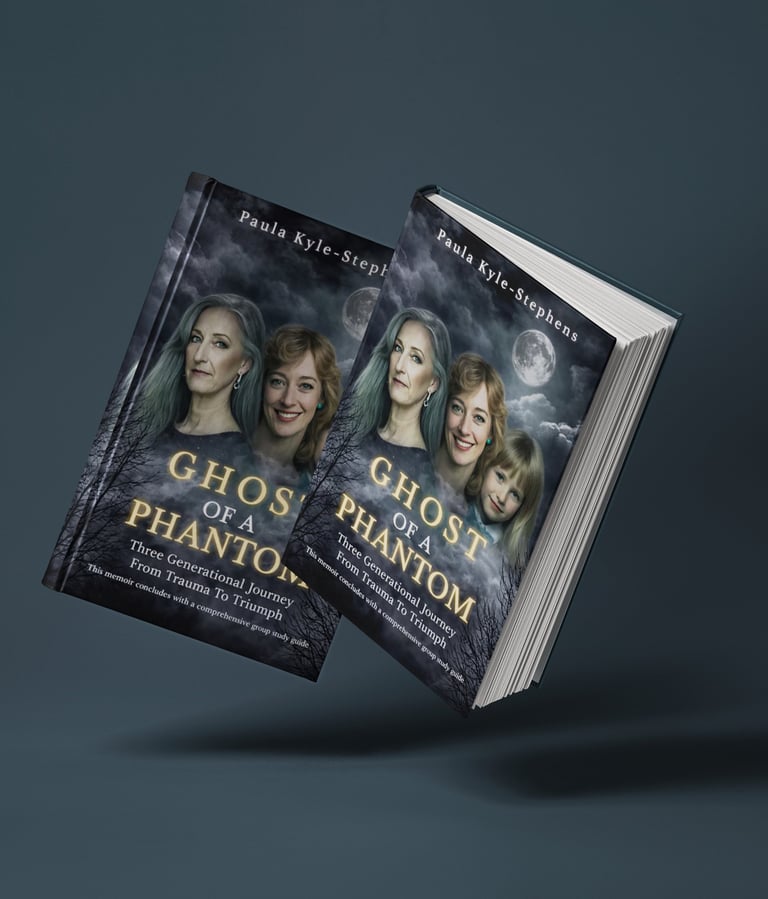

GHOST OF A PHANTOM
A Three Generational Journey From Trauma To Triumph
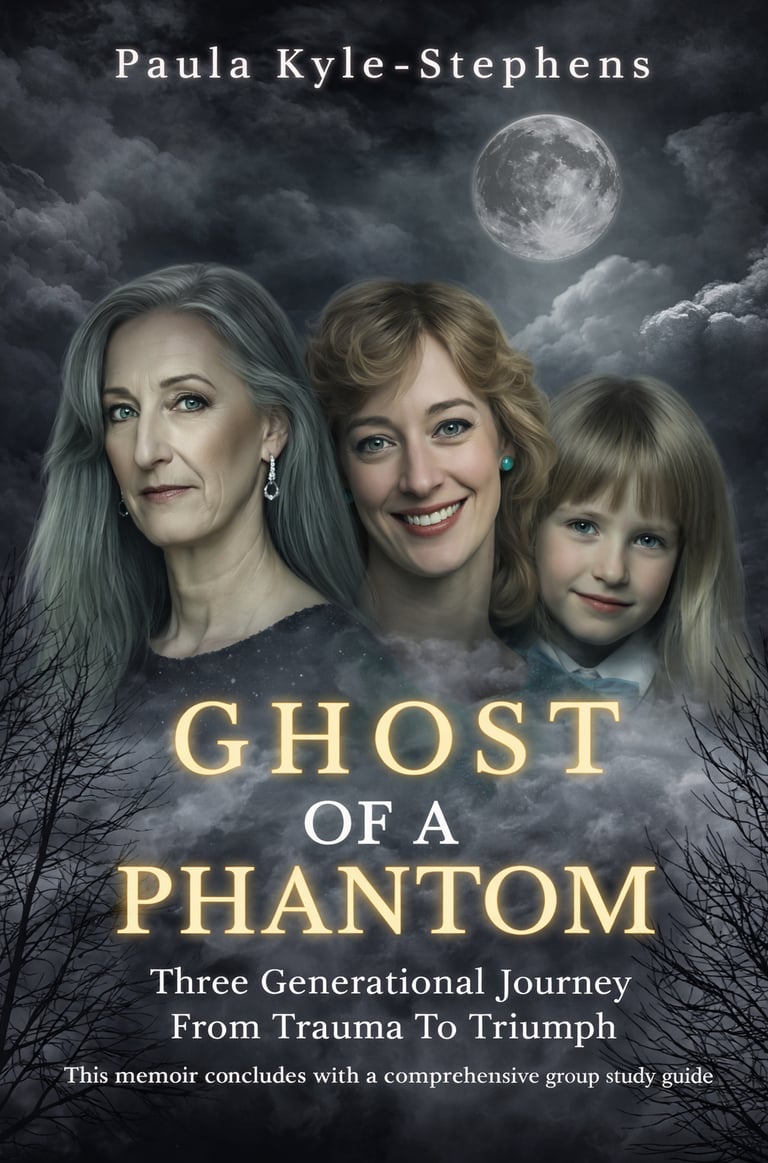
Ghost of a Phantom is a powerful, deeply personal memoir chronicling Paula’s journey from a turbulent childhood in a military family, through the trauma of loss, abuse, and the foster care system, to eventual healing, advocacy, and hope.
The story begins with Paula’s early years as the eldest daughter in a large, blended military family, marked by frequent relocations and the shadow of her father’s service in Vietnam. The sudden, mysterious death of her mother while living overseas shatters the family, leading to Paula and her siblings being separated and placed in different foster homes upon their return to Ohio. This moment of rupture—being handed a small paper bag of belongings and torn from her sisters—becomes the defining trauma of her childhood.
Paula’s experiences in foster care are harrowing she is uprooted seven times in a single year, faces neglect and abuse in several homes, and endures the pain of being stigmatized and bullied at school. The memoir does not shy away from the darkness—detailing the cruelty of her stepmother, the indifference of some foster parents, and the emotional toll of being labeled and misunderstood. Yet, it is also a testament to resilience: Paula clings to hope, music, faith, and the memory of her siblings as lifelines.
A turning point comes when Paula is placed with Larry and Bonnie Ulrey, foster parents whose compassion, wisdom, and unwavering support become a roadmap for healing. Through their gentle guidance, she learns the power of forgiveness, the importance of self-worth, and the value of belonging. The Ulrey’s never refer to her as a “foster child,” but as “daughter number two,” offering her the unconditional love, and stability for which she has longed. Their home becomes a sanctuary, and their lessons—on everything from saving money to setting the dinner table—become the foundation for Paula’s recovery and growth.
The memoir explores the long-term effects of trauma, including Paula’s struggles with PTSD, trust, and relationships as an adult. It follows her journey through young motherhood, marriage, divorce, and the challenges of raising her own children while still haunted by the ghosts of her past. Paula’s path is not linear—she faces setbacks, breakdowns, and moments of despair—but she also finds moments of profound healing, especially through her work as an advocate, mentor, and trainer for foster youth and parents.
Interwoven throughout the narrative are stories of reunion and loss: reconnecting with her siblings after decades apart, grieving the deaths of loved ones, and finding closure in unexpected places. The memoir is also a tribute to the unsung heroes of the foster care system—caseworkers, teachers, and especially foster parents like Larry and Bonnie—whose kindness and commitment can change the trajectory of a child’s life.
Paula’s voice is honest, vulnerable, and at times, poetic. She invites readers into the labyrinth of her memories, sharing not only the pain and confusion but also the small miracles and moments of hope that sustained her. The memoir closes with a message of empowerment: that healing is possible, that knowledge and compassion can break cycles of trauma, and that every child deserves to feel wanted and loved.
Ghost of a Phantom is more than a survivor’s tale it is a call to action for foster parents, social workers, educators, and anyone who cares about the welfare of children. It is a testament to the enduring strength of the human spirit and the transformative power of love, belonging, and hope.
This Memoir has a Companion Trauma Workbook
Powerful Excerpts
“Before I could climb inside, six-year-old Debbie, always the little rebel, burst out of the garage. Her face streaked with tears; her sobs raw and pleaded as she clung to me, desperate for reassurance. The fear in her eyes was unmistakable—a child’s terror of being left behind, at losing the only family she truly knew. ‘Will you ever come back?’ She cried, her voice trembling with longing and dread. I was paralyzed, unable to offer comfort, my own grief threatening to overwhelm me. In that moment, Debbie pressed a small mirror into my hand—a gift, she said, so I would not forget her. The gesture was so heartbreakingly earnest that it cut through my numbness, and guilt surged within me.”
The Moment of Separation
The Power of Hope and Resilience
“GHOST OF A PHANTOM is a memoir born from that moment of rupture. It is a story of what happens when the battlefield follows you home, when trauma becomes inheritance, and when the world you trust is swept away in a single afternoon. With nothing but a paper bag of belongings and a heart full of questions, I began a journey through foster care, longing, and the labyrinth of searching for family. Yet, this is not only a story of loss. Woven through the darkness is a thread of hope—sometimes faint, sometimes dazzling as a rainbow after rain.”
The Transformative Power of Acceptance
“Their only daughter was twenty-three—her name was Linda. Though she no longer lived with her parents, she visited every day, bringing a sense of family and continuity to my new life. This home, set on a large farm with two horses, felt like a dream come true for me. Horses had always been my hope for someday, and now, here they were—a symbol of new beginnings. … Moving in with the Ulrey’s was both overwhelming and hopeful. I remember feeling alone, missing my siblings deeply, and unsure how to fit into this new family. Yet, from the very beginning, they showed me compassion and acceptance. They did not just give me a place to stay—they gave me a sense of belonging and made me feel seen, even when I struggled with the silence and the attention that came with being the only child. Their kindness helped me heal, and their patience taught me that it was okay to be myself, even when I was hurt.” I was never a foster daughter, I was daughter number Two, with Linda being Daughter number one.